Skip to content
PoultryMed
  • Home
  • Our Services
  • About Us
  • Book an Appointment
  • Products Shop
  • Poultry Resources

Learning Hub

Welcome to our resource hub for poultry health and veterinary care. Here, you’ll find expert guidance on disease prevention, nutrition, management practices, and treatment options to keep your flock healthy. Use the navigation menu to explore articles, guides, and tools designed for backyard keepers and commercial producers alike.


Management

  • Deworming Backyard and Small Flocks

  • Downtime Between Poultry Flocks: Why It Matters

  • Drinking Water and Management

  • Gut Health in Poultry: What Affects Gut Balance and How to Improve Flock Performance

  • How to Build Strong Biosecurity on Your Poultry Farm

  • Simple Ways to Increase Egg Quality and Consistency

  • The Silent Stressors: Light, Noise, and Microclimate Effects on Poultry Behavior

  • Understanding Poultry Labels

  • Water Flow and Pressure

  • Welfare Assessment on Farms: What Good Welfare Actually Looks Like

  • What your water lines know before you do

  • Why Monitoring Matters in Every Barn

Poultry Diseases

  • Avian Influenza Prevention: What Farmers and Bird Owners Need to Know

  • Coccidiosis in Poultry: Pathogenesis, Clinical Signs, and Control Strategies

  • Inclusion Body Hepatitis (IBH)

  • Infectious Laryngotracheitis (ILT) in Poultry: A Persistent Threat to Flocks

  • Northern Fowl Mite and Red Chicken Mite: Impact, Signs, and Control

  • Safeguarding Turkey Flocks: A Practical Guide to Managing Histomoniasis (Blackhead)

  • Scaly-Leg Mites in Birds


Search the website

Water Flow and Pressure

By Dr. Maral Rahmani

PoultryMed Veterinary Services

November 2026


Water Flow and Pressure: Are Your Broilers Getting Enough Water?

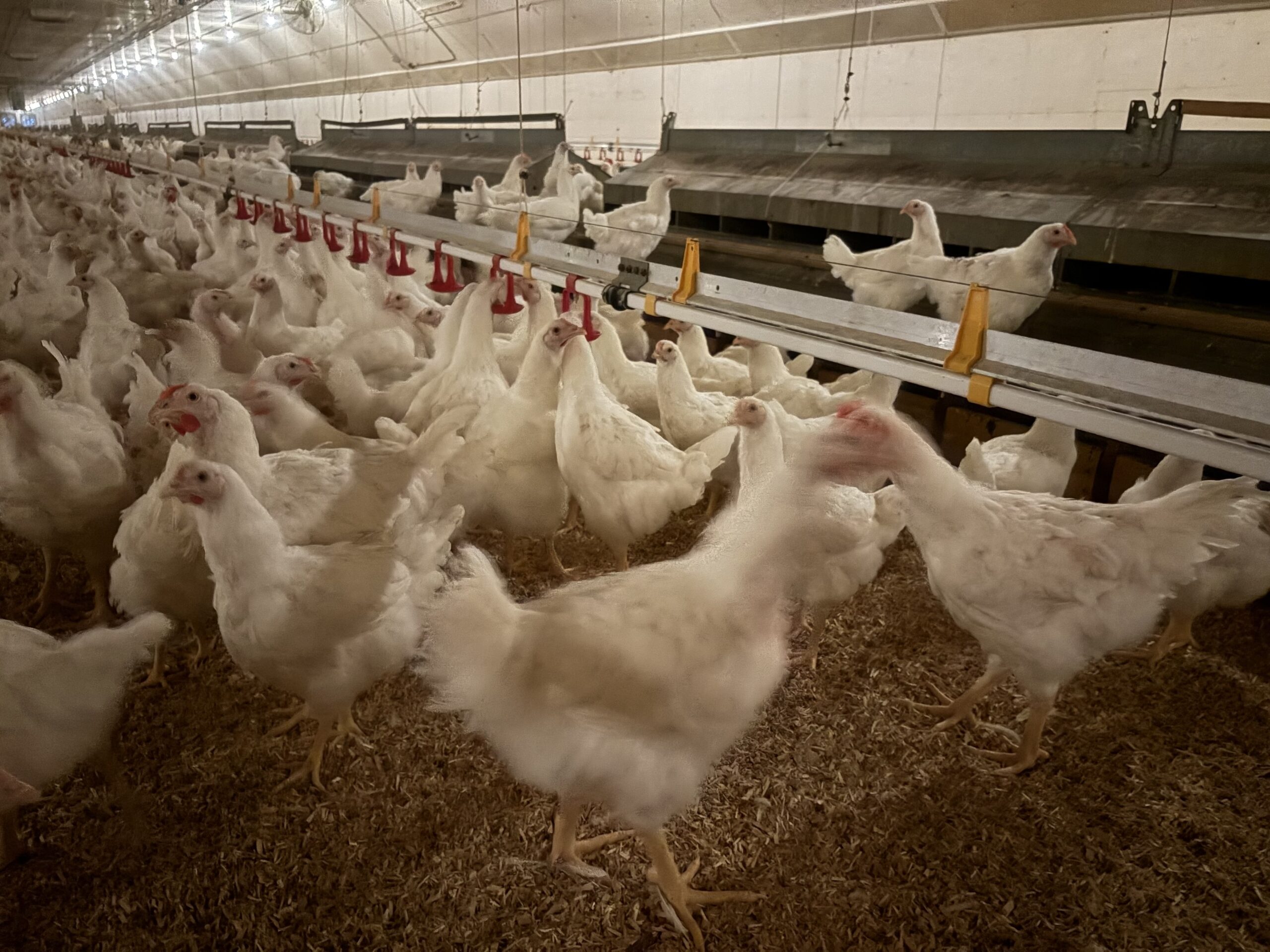
Water is essential for broiler growth, feed intake, and overall flock performance. However, having water available is not enough. The watering system must deliver clean water at the right flow rate and pressure, with drinker lines positioned at the correct height.

Broilers typically consume around 1.6–2 litres of water per kilogram of feed, although the ratio varies with age, diet, temperature, and management. As birds grow, their water requirements increase, making regular checks of the watering system important throughout the flock cycle.


1. Flow rate: Match water delivery to bird demand

Drinker flow rates should be adjusted as birds grow. If the flow is too low, birds may struggle to meet their water requirements, potentially reducing feed intake and growth. If it is too high, water spillage can increase, contributing to wet litter, elevated ammonia levels, and footpad dermatitis.

2. Water pressure: Keep it consistent

Water pressure directly affects how much water is delivered through the drinkers. Excessive pressure can contribute to leakage and spillage, while insufficient pressure may limit water availability, particularly when demand is high.

Check pressure and flow along the entire drinker line, not just at the regulator. Differences between the beginning and end of a line can leave some birds with less access to water than others.


3. Drinker-line height: Watch the birds

Correct drinker height allows birds to activate the nipples easily while minimizing water wastage.

  • Line too low: Birds may drink with their bodies low or sit while drinking, and spillage may increase.
  • Line too high: Birds may stretch excessively or struggle to reach and activate the nipples.

Adjust the line as birds grow, and observe how they drink. Bird behaviour, litter condition, and water consumption together provide useful clues about whether adjustments are needed.


4. Water quality and temperature matter

Clean water and well-maintained drinker lines are just as important as correct flow and pressure. Biofilm, mineral deposits, and other buildup can affect water quality and interfere with drinker performance.

During hot weather, warm drinking water may further reduce water intake when birds are already under heat stress. Regularly flushing the lines, maintaining water sanitation, and checking water temperature can help support consistent consumption.


What should producers check?

A few routine checks can help identify problems before they affect flock performance:

  • Measure nipple flow rates at representative points along the line.
  • Check water pressure and confirm that delivery is consistent.
  • Adjust drinker height as birds grow.
  • Monitor daily water consumption and investigate unexpected changes.
  • Check for leaking nipples, wet litter, and signs of restricted access.
  • Flush and maintain water lines according to the farm’s water-management program.

The bottom line:

Water intake is closely linked to feed intake and broiler performance. Even small problems with flow, pressure, drinker height, or water quality can affect flock uniformity, litter condition, and overall results. Regular monitoring helps ensure that birds have reliable access to water when they need it most.


Contact us if you need advice

Need help assessing or improving your flock management strategies? Contact our team today by submitting a form at our contact/enquiries page or email us directly at info@poultrymed.ca

PoultryMed

PoultryMed

Home

Enquiries

Email us at info@poultrymed.ca

About

  • About Us
  • History
  • Careers

Privacy

  • Privacy Policy
  • Terms and Conditions
  • Contact Us

Social

  • Instagram
  • Facebook
  • Twitter/X

© 2025 PoultryMed Veterinary Services Ltd. All rights reserved.

Email: info@poultrymed.ca

Or complete the below form to contact us with any questions:

Contact Form

imunify-bot-check
Manage Consent
To provide the best experiences, we use technologies like cookies to store and/or access device information. Consenting to these technologies will allow us to process data such as browsing behavior or unique IDs on this site. Not consenting or withdrawing consent, may adversely affect certain features and functions.
Functional Always active
The technical storage or access is strictly necessary for the legitimate purpose of enabling the use of a specific service explicitly requested by the subscriber or user, or for the sole purpose of carrying out the transmission of a communication over an electronic communications network.
Preferences
The technical storage or access is necessary for the legitimate purpose of storing preferences that are not requested by the subscriber or user.
Statistics
The technical storage or access that is used exclusively for statistical purposes. The technical storage or access that is used exclusively for anonymous statistical purposes. Without a subpoena, voluntary compliance on the part of your Internet Service Provider, or additional records from a third party, information stored or retrieved for this purpose alone cannot usually be used to identify you.
Marketing
The technical storage or access is required to create user profiles to send advertising, or to track the user on a website or across several websites for similar marketing purposes.
  • Manage options
  • Manage services
  • Manage {vendor_count} vendors
  • Read more about these purposes
View preferences
  • {title}
  • {title}
  • {title}

Your cart (items: 0)

Products in cart

Product Details Total
Subtotal $0.00 Updating
Shipping, taxes, and discounts calculated at checkout.
Cart
Checkout

Your cart is empty

Return to shop

Notifications